











India – a land of widespread poverty and illiteracy in 1947 – has undoubtedly transformed since then, with faster poverty reduction since the 1991 reforms. Life expectancy has doubled in the last 75 years – from 35 in 1950 to 71 now. While literacy at the time of the 1951 census was around 18%, today almost all Indian children in the 6–14-year age group attend school.
However, learning poverty remains a significant challenge. Incremental progress is occurring, but more needs to happen. India produced 4.2% of global GDP in 1950, a ratio that has slipped to 3.4% now, even as it harbours 18% of the world’s population. To rise to its incredible potential, what India needs is rapid growth and inclusive development.
To what extent is Indian philanthropy oriented towards these goals? In FY 2024, an amount of Rs 1,31,000 crore found its way towards philanthropic projects in India. Of this amount, roughly 30% came from retail sources, 18% from foreign foundations, 25% from corporate social responsibility (CSR) funds and 26% from philanthropy practised by high and ultra-high net-worth individuals (HNIs and UHNIs).
Retail giving is unable to take a long-term view as it is highly unorganised, as well as oriented towards immediate community needs and religious giving. Foreign philanthropy is expected to stagnate as India advances and the former moves on to more vulnerable geographies.
That leaves CSR and HNI/UHNI funding to pursue long-term goals. Moreover, even as the prevailing mental model of philanthropic action is a linear one of providing direct services to local communities, the patient and flexible capital that CSR and HNI/UHNIs are capable of providing can move the needle towards riskier, non-linear and exponential, “big bet” projects that tackle India’s toughest development challenges and aspire to solve them on a population scale.
Such an approach to philanthropy – which has been dubbed the “Big Shift” or a “systems change” approach – will necessarily involve the government, for a number of reasons. First, the government has the power of taxation, and its resources are always an order of magnitude larger than anything private philanthropy can deploy. Thus, private philanthropy’s expenditure of Rs 1,31,000 crore in FY 2024 was dwarfed by public spending in the social sector the same year: Rs 24 lakh crore.
Second, it is governments at the central, state and local levels that make the rules and have the mandate to work for all people. For solutions to work at a population scale, there is no alternative to working with the government. As Rakesh Rajani and Tim Hanstad have argued: ‘The well-being of people and planet is largely determined by how government systems are organized and operate.’
Therefore, to catalyse large-scale change, the relevant question to ask is not why work with the government but how.
The journey leading to the creation of The Convergence Foundation (TCF) began with philanthropic “big bets” on education as a transformative force – the founding of Ashoka University in 2010 and the Central Square Foundation (CSF) in 2012. Taken together, they focused on both ends of the educational spectrum. While Ashoka University took its mission to be a world-class research university in the liberal arts and sciences on Indian soil – which attracted the brightest and the best – CSF took upon itself the task of improving learning in Indian schools from the earliest stages.
As Ashoka University and CSF matured, a portfolio of organisations working on diverse, yet important areas such as improving leadership capacity in the social sector, reducing air pollution, improving the effectiveness of government expenditure and inspiring other philanthropists to give with purpose were seed-funded. Almost a decade of experience and learning in philanthropy prepared the ground for the establishment of TCF in April 2021.
TCF believes that for a developing country like India, economic growth is the most powerful engine for improving people’s lives. There is much research demonstrating that growth in mean incomes is a primary driver of reductions in poverty; no country has achieved a high level of GDP per capita and simultaneously maintained low levels of human welfare, and conversely, no country has achieved high levels of basic human needs at low levels of GDP per capita. As countries transition from low GDP per capita to high middle income, economic growth helps to address basic human needs such as education, sanitation, water, nutrition and more.
India’s experience also validates this theory. Between 1950 and 1980, India grew modestly at 3.8% (adjusted for the 2% population growth, GDP per capita rose even more slowly). However, economic reforms elevated annual growth rates of 6% in the 1990s and 8% in the 2000s. During this period, India was able to lift millions of people out of poverty due to a mutually reinforcing effect: people’s incomes rose, and high growth led to increases in government revenue, which dramatically boosted spending on social programmes in education, food and rural livelihoods.
Nevertheless, India – with a GDP per capita of around $2,900 as per current IMF estimates – still has a long way to go. In approaching its goal of fostering rapid and sustained economic growth, TCF’s work has three mutually reinforcing pillars.
Pillar 1: Accelerating economic growth: This comprises areas that can have an immediate impact on catalysing growth and jobs: boosting exports of goods and services, fostering an attractive investment climate, developing cities and industrial regions as growth engines, developing tourism and making India a top science and technology innovator.
Pillar 2: Enhancing human capital: This looks at people as the most valuable resource; investing in them can be the most significant contributor to long-term growth. It embraces education at all levels: early childhood education to employability and skilling; economically empowering women; and promoting India as a Global Talent Hub.
Pillar 3: Advancing development enablers: This focuses on creating an ecosystem for rapid development by strengthening state capacity to perform its core functions of delivering public services to all Indians, training high-quality leaders for the social sector and enhancing strategic philanthropy to effect population-scale improvements.
Building pioneering institutions lies at the heart of TCF’s approach. Institutions enable people to work together to solve complex problems and can drive outcomes at scale over long periods. We believe this represents one of the highest returns on investment and effort for philanthropy. Moreover, there is a large funding gap here as flexible, patient, early-stage funding for risky system change ideas is still uncommon in India.
We believe India can become a developed and prosperous nation by the hundredth year of its Independence; all our institutions are inspired by and work towards this goal. We want to be the preferred home to some of the best technical, entrepreneurial and managerial talent solving complex problems at scale. While we seed fund institutions, our biggest value-add is the hands-on support we provide right from recruiting the team to helping shape organisational strategy. We believe in having a clear north-star metric for success. This metric should be meaningful, achievable and lead to a population-level change. We measure ourselves on two simple parameters: the real-world impact we make and the quality of institutions we build.
TCF is determined to move the needle towards more systems giving. What would be the ingredients of a systems approach? It involves testing new ideas and approaches to solving society’s toughest problems, piloting new programmes and modifying them so that they become amenable to being adopted by the government and scaled up significantly. It also involves creating an ecosystem for the dissemination of knowledge, building partnerships and connections and providing a platform for learning. The end goal of such philanthropy is shaping and supporting organisations that will be relevant for decades, leading to the creation of sustainable institutions for the public good.
Which level of government – centre, state, local – should TCF and partner organisations engage with to achieve the most catalytic impacts? This will vary from organisation to organisation and issue to issue; in practice, they have worked at all three levels. However, given India’s size and diversity, a great deal can be achieved by working with state governments, which should therefore be a key area of focus.
As development economist Karthik Muralidharan has argued, states are primarily responsible for public service delivery, such as in the areas of education, health and law enforcement. They control budgets and personnel for these areas; even when the centre funds programmes, it is the states that implement them. State governments also have a major role in formulating laws and policies that govern investment and job creation, such as labour and land acquisition laws, and the provision of various permits. It is extremely important, therefore, to work institutionally with state governments.
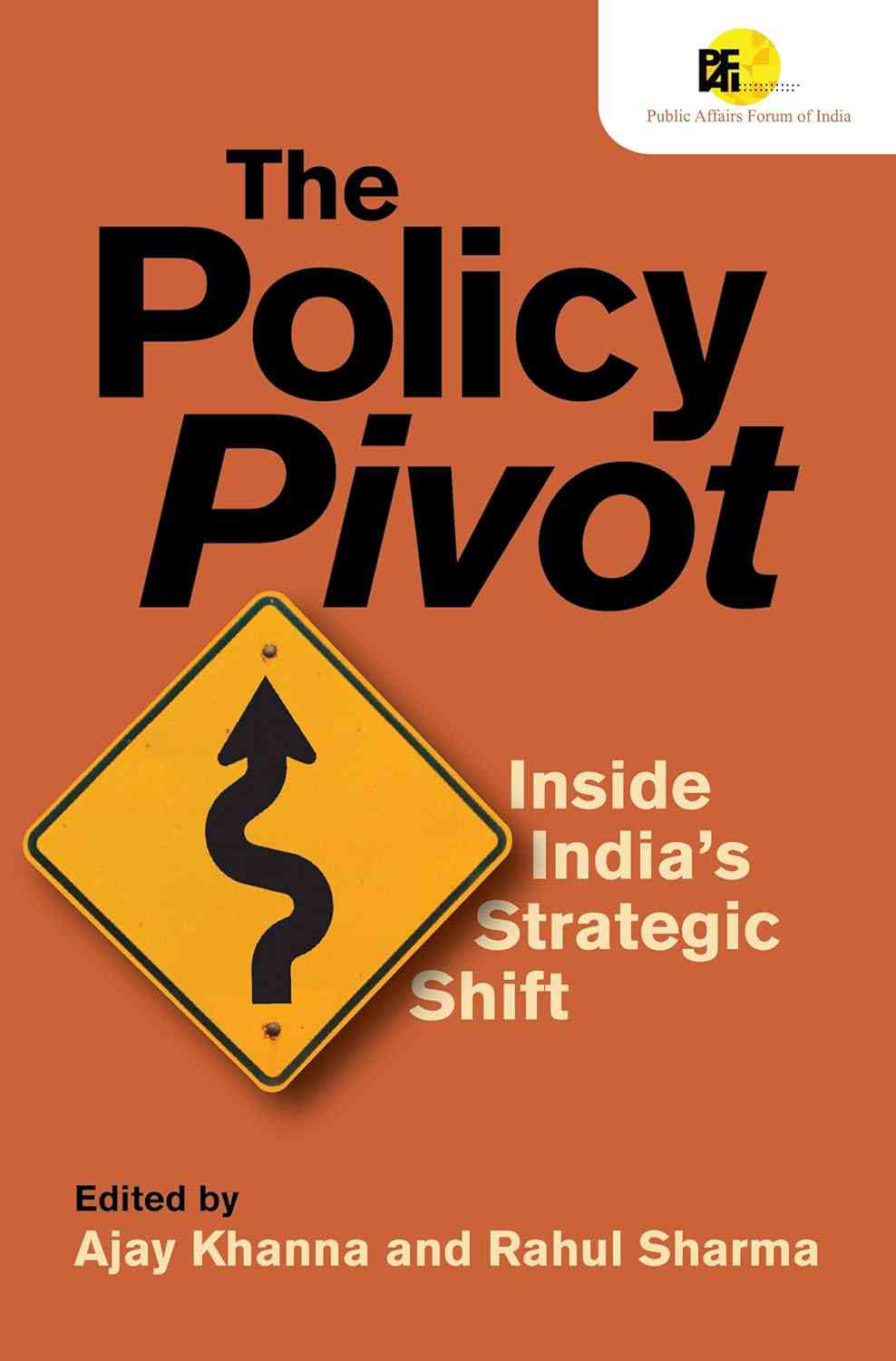
Excerpted with permission from ‘How Indian Philanthropy Needs to Evolve for Higher Return on Investment’ by Ashish Dhawan, Praveen Khanghta, and Swagato Ganguly in The Policy Pivot: Inside India’s Strategic Shift, edited by Ajay Khanna and Rahul Sharma, Juggernaut.
